
Data Analysis
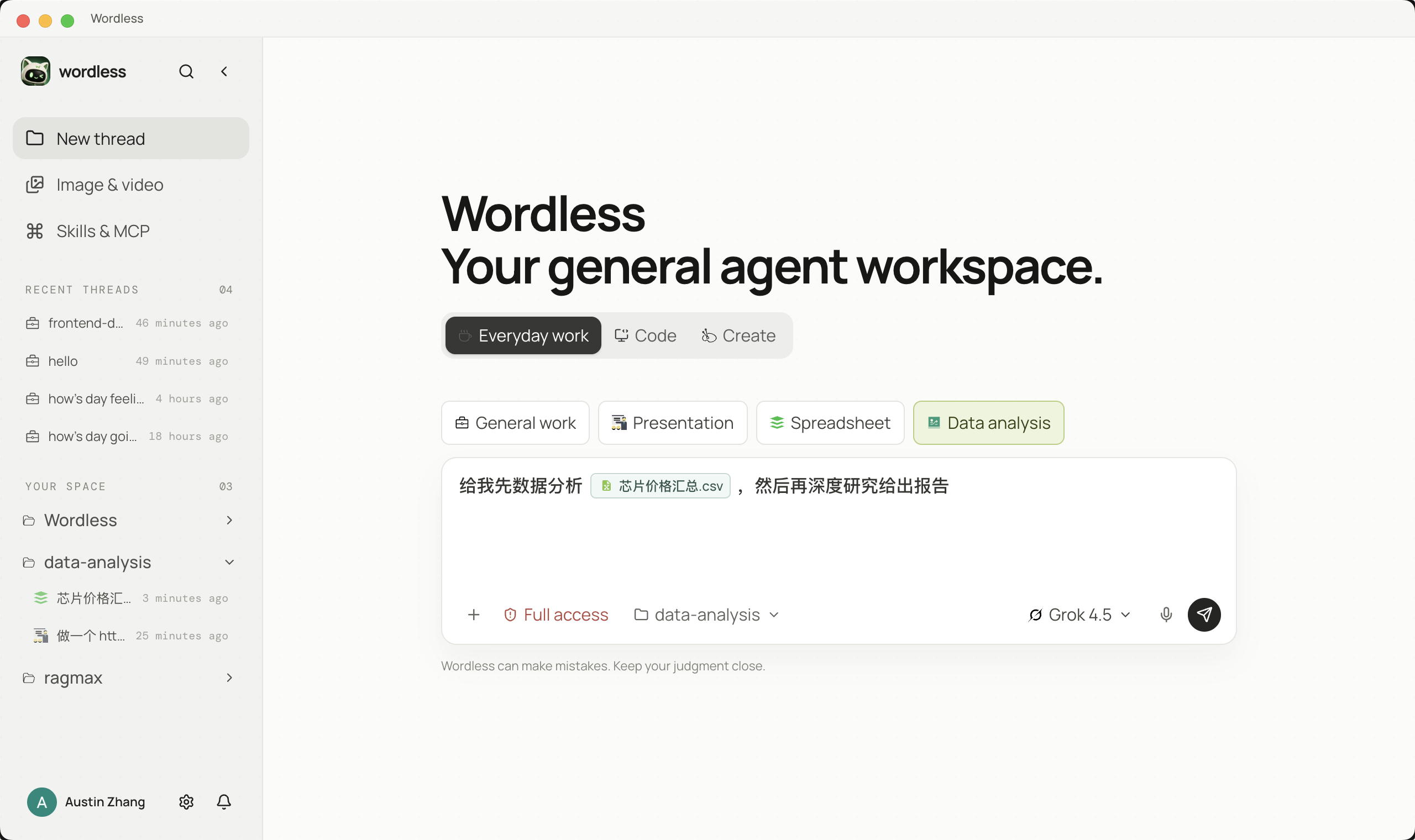
- Select Data Analysis, reference the data, and define each important field.
- Ask for a research plan and review its dimensions and evidence requirements.
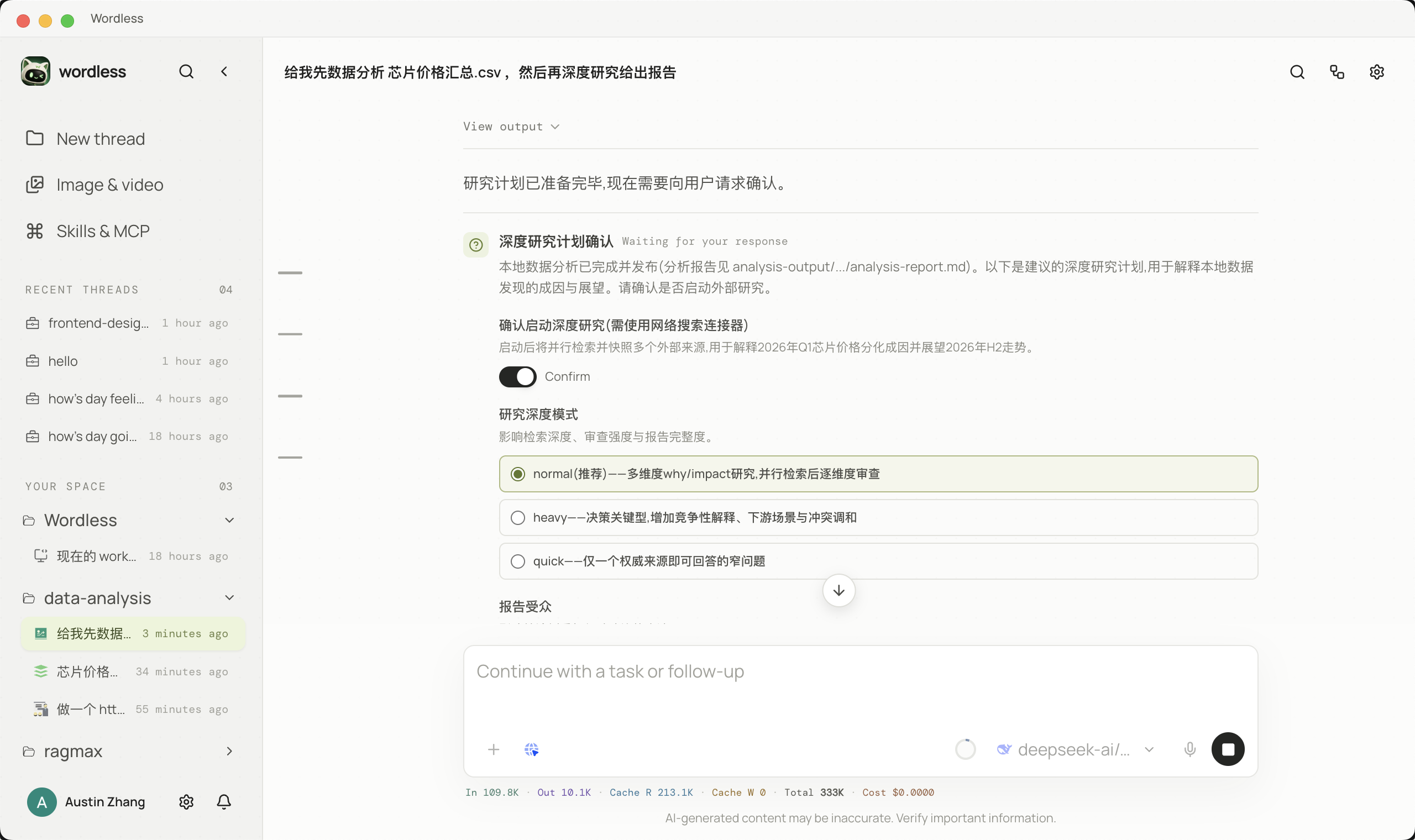
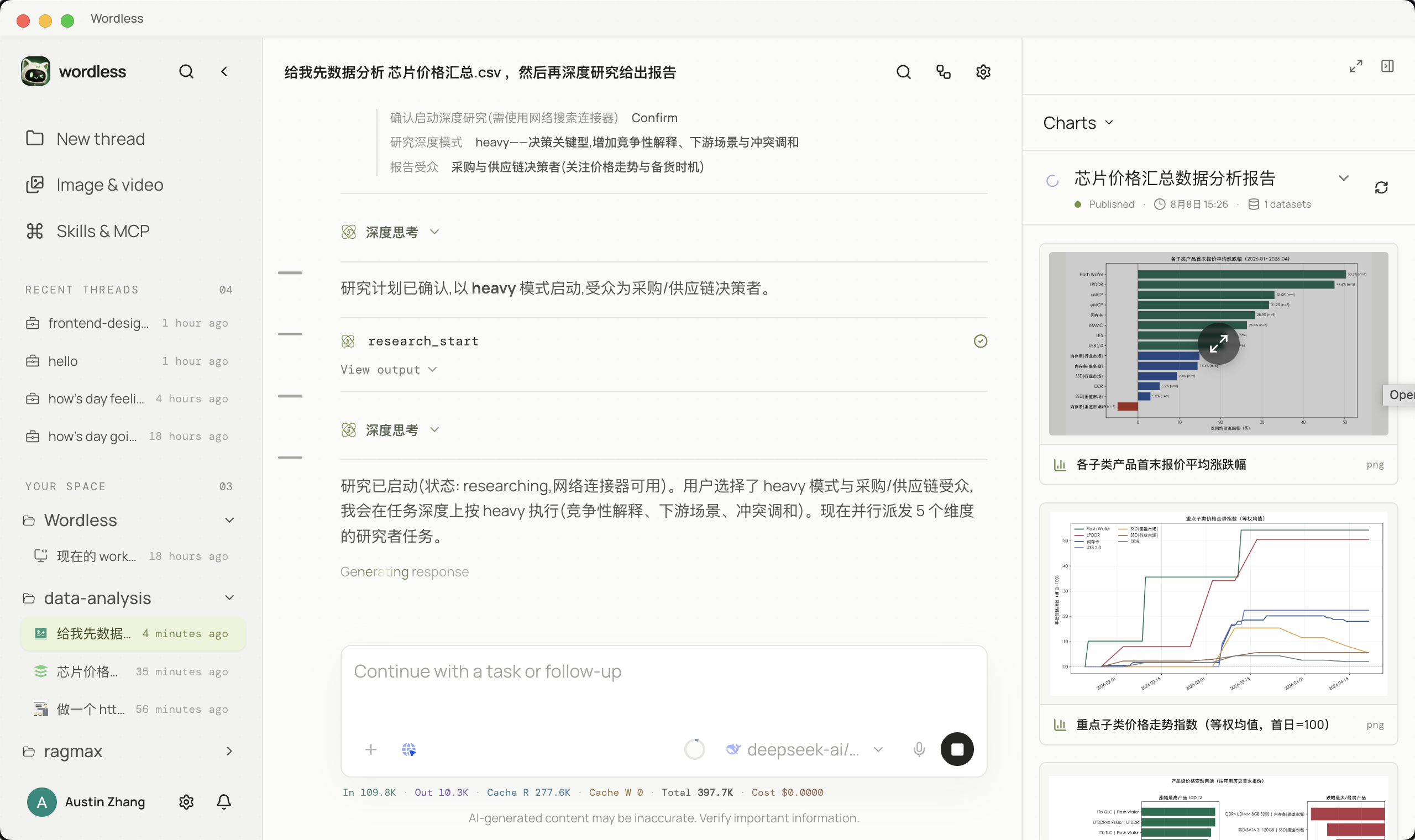
- Confirm the plan;
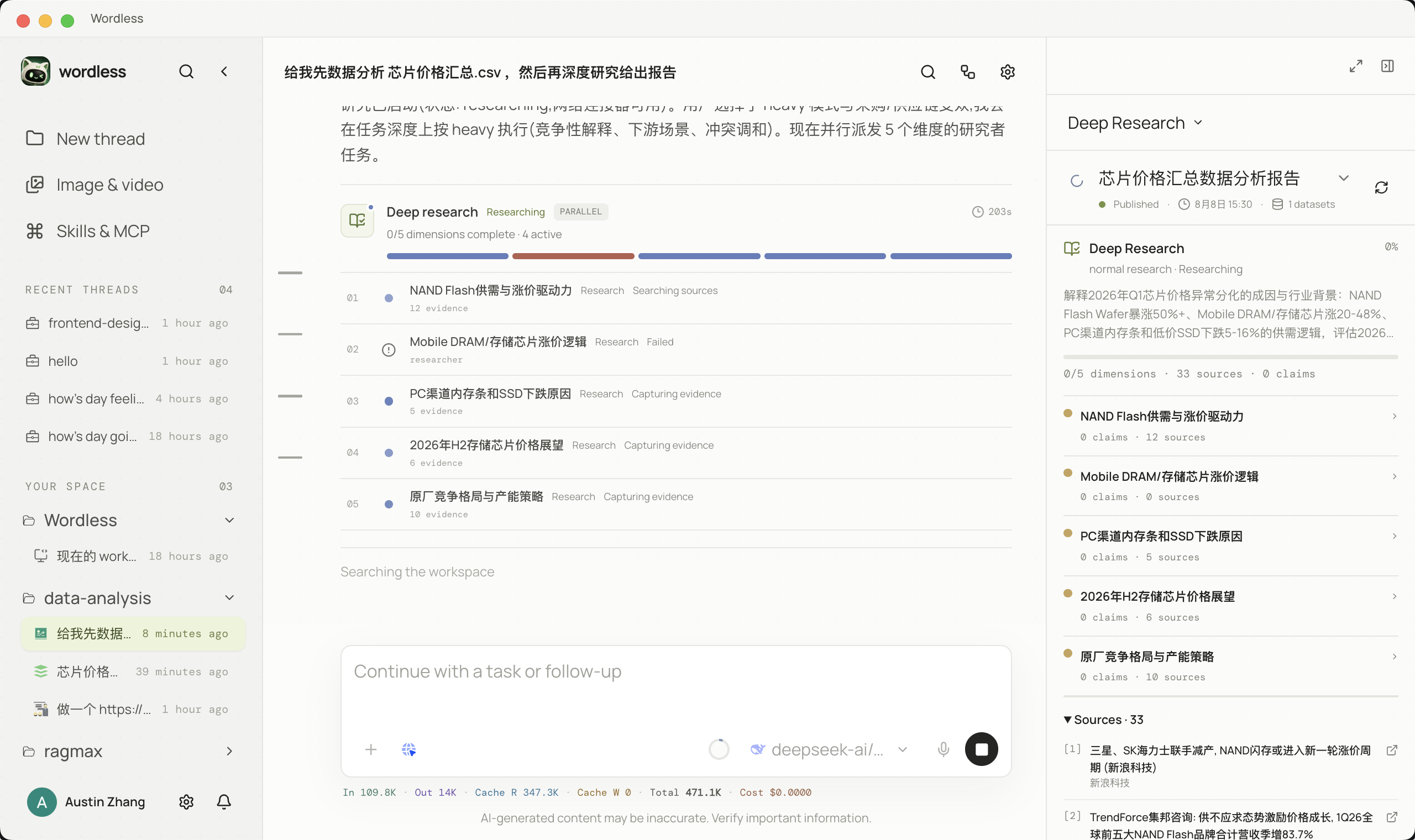
research_startmust receive the returned, currentconfirmationToken. - Inspect each
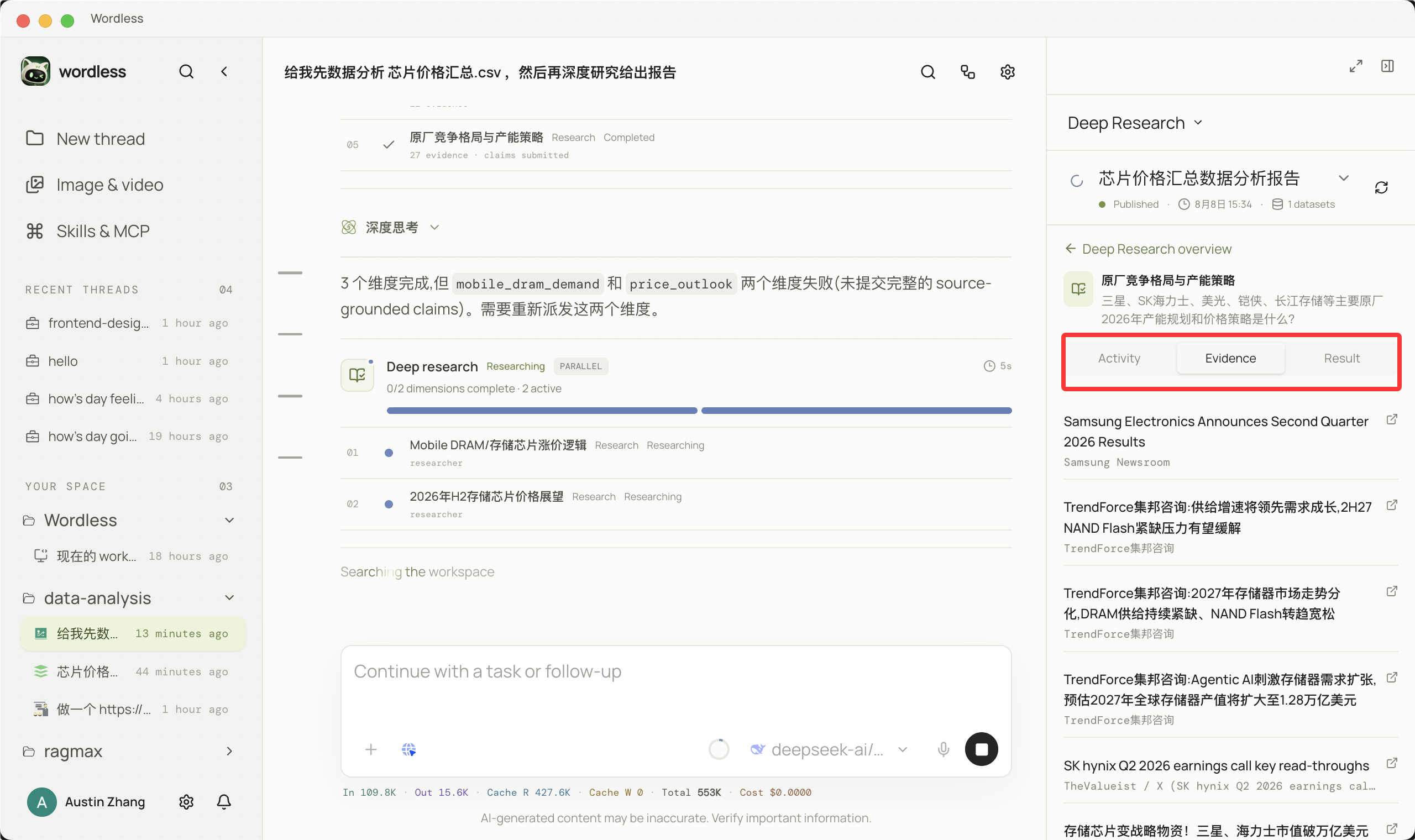
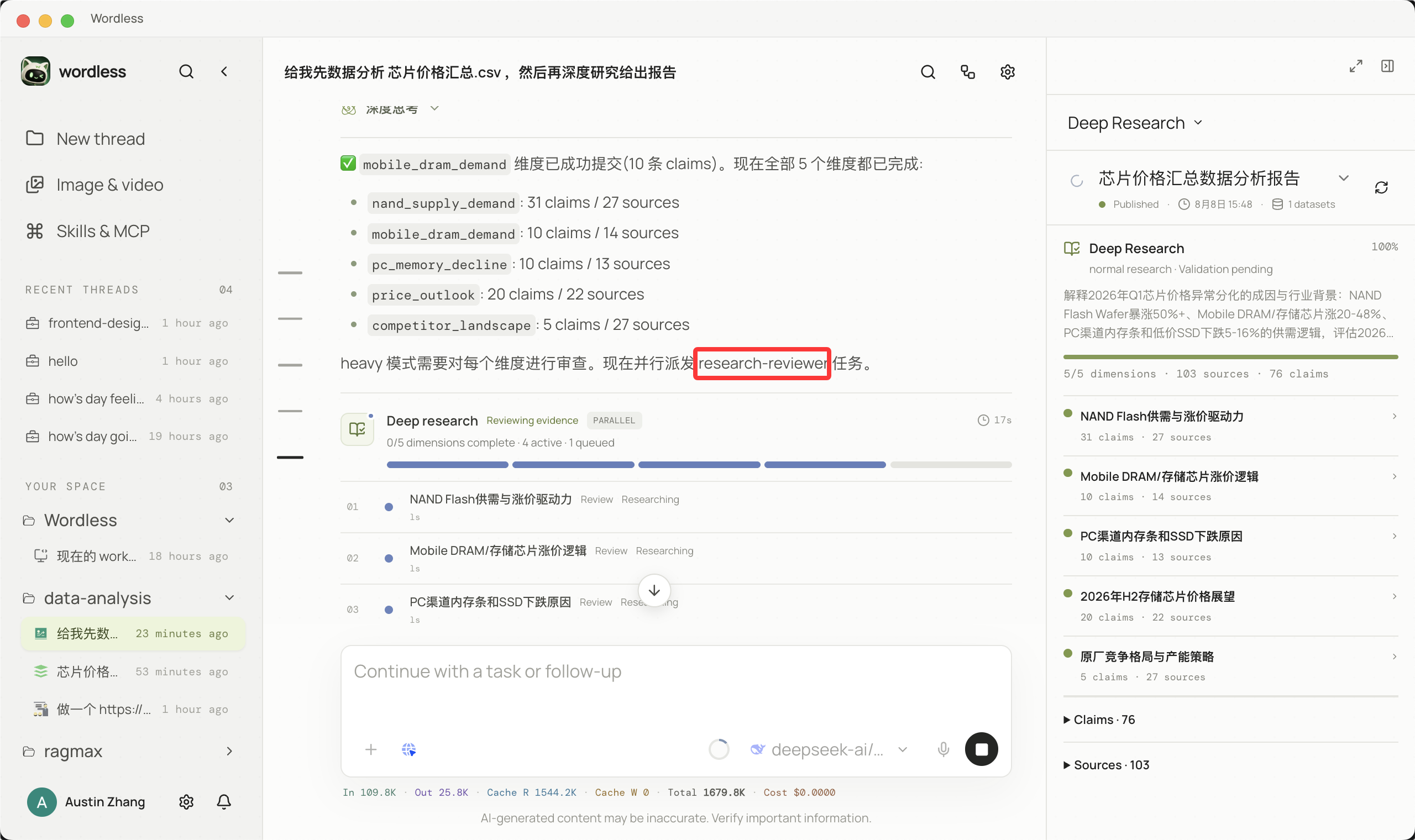
research_delegatedimension independently: queued, running, success, or failed. - Require contradictions, missing evidence, and assumptions to be separated before synthesis.
- Export the report and spot-check source rows or links.
Copyable prompt
Analyze @survey.xlsx user retention. Propose a plan covering data quality, segments, time trends, anomalies, business explanations, and actions. Wait for my confirmation before starting. Cite a field, row, or source for every conclusion and label assumptions.
What is different in Wordless
Section titled “What is different in Wordless”Research is not an opaque tool card. Wordless separates the confirmation token, research dimensions, per-researcher sources, and final synthesis so a failed dimension can be rerun without repeating the entire analysis.
| Scenario | Example dimensions | Verification |
|---|---|---|
| Retention diagnosis | Quality, cohorts, trends, anomalies, explanations, actions | Claims cite fields, rows, or sources |
| Market research | Size, competition, users, pricing, risks, evidence | Each researcher can be expanded |
| Resume after failure | Rerun only failed dimensions | Successful dimensions are preserved |